


Stale data leads to pension fraud because a pension record is only as true as its last update. When a pensioner dies, moves or changes accounts and the administrator never learns of it, payments keep flowing on a record that no longer matches reality. That gap is where a relative, an estate representative or an outright fraudster can collect money that is no longer owed. In most cases nobody set out to steal. The record simply went out of date, and nothing in the system caught it.
This guide explains the mechanics, shows where Canadian regulators say the weak points are, and sets out what plan administrators, insurers and enterprise data teams can do about it.
Key takeaways
- Most pension leakage starts as a data problem, not a hacking problem: an unreported death, an old address or a bank account nobody re-verified.
- Canadian regulators say an unreturned verification form is not proof of death, so administrators need independent data to act with confidence.
- Direct deposit removes the returned-mail signal that once exposed dead or missing pensioners.
- Regular retiree and survivor audits, matched against current deceased and address data, close most of the gap.
- Fresh, Canadian-sourced data is a control, not a marketing extra: the same discipline protects plan assets and customer files.
Table of Contents
- What “stale” means for a pension record
- Why the gap exists: systems that do not talk to each other
- Five ways stale data turns into fraud or improper payment
- What the numbers look like when nobody checks
- What regulators expect: audit, document, verify
- Where fresh data fits
- Our perspective
- A practical checklist for administrators and data teams
- Cleanlist for deceased suppression and data cleaning
- FAQ
- Sources
What “stale” means for a pension record
Stale data is information that no longer reflects the state of the thing it describes because nobody updated it after a change. In a pension plan, the changes that matter are few and predictable:
- Death of a pensioner or survivor. Benefits should stop or change, but the administrator is often the last to know.
- Change of address. Statements, cheques and verification forms go to a place where the member no longer lives.
- Change of banking details or authorized contact. Deposits continue to an account someone else may now control.
- Change of marital status or beneficiary. Survivor entitlements shift, but the file still shows the old picture.
Each of these is an ordinary life event. Fraud risk appears when the record stays frozen while the person’s life moves on, and when someone with access to the money notices before the administrator does.
Why the gap exists: systems that do not talk to each other
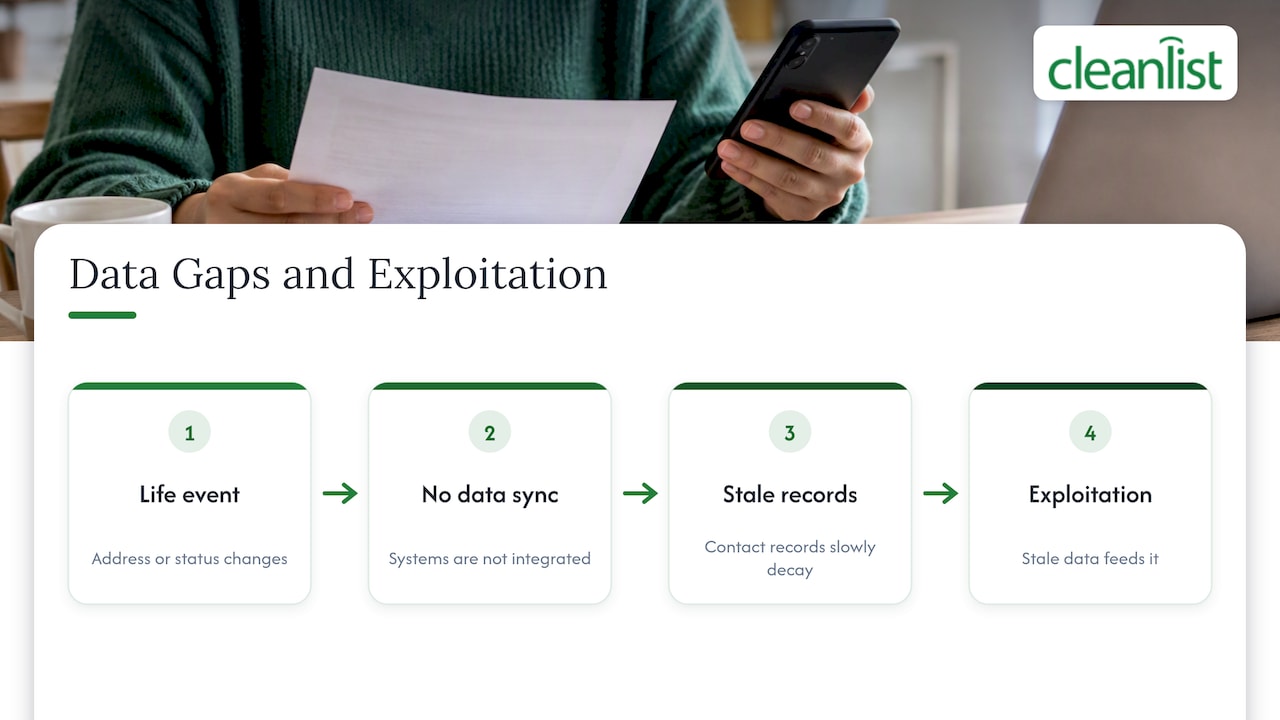
Many people assume that government agencies automatically pass a new address or a death to their former employer’s pension administrator. They do not. The Financial Services Regulatory Authority of Ontario describes how individuals assume agencies share updated address or status information, when in practice the systems are not integrated. The result is an administrator holding contact records that slowly decay, until communication is lost and, in some cases, nobody can say whether a beneficiary is still alive.
The National Institute on Ageing frames the same problem from the member’s side. Its report on missing pension plan members in Canada treats reconnecting people with their pensions as a data matching exercise. Sensitive personal data sits in siloed systems, and the party holding the funds and the party entitled to them often lack a secure, reliable way to synchronize status changes. Long periods of stale data follow, and stale data is what exploitation feeds on.
Public programs face the same structural issue. As of December 2025, the Canada Pension Plan and Old Age Security can validate birth and identity information through the Social Insurance Registry, but original or certified documentation is still required for proof of death or marriage in many cases. That is sensible caution, but it also means the time between a real-world event and an updated administrative record can be long.
Five ways stale data turns into fraud or improper payment
1. Payments continue after death
The simplest path is also the most common. A pensioner dies, the administrator is not told, and the pension keeps being paid. Legal commentary from Dentons observes that this is not limited to criminals forging signatures: bereaved relatives and overwhelmed estate representatives can inadvertently keep receiving pensions that should have ceased. The same paper notes that the RCMP has publicly reported Criminal Code charges against individuals who fraudulently received the CPP benefits of dead relatives for years.
The distinction matters for controls. Deliberate fraud and honest oversight produce the same symptom, an overpayment on a deceased member’s record, and both are prevented by the same thing: learning of the death quickly.
2. Direct deposit hides the warning signs
Direct deposit is efficient, and it has a side effect. In the days of paper cheques, an uncashed cheque or returned mail could flag a problem. With deposits, there is no physical step to break. OSFI’s Info Pensions newsletter from May 2022 is the regulator’s reference point on retiree and survivor audits, and the underlying risk is straightforward: money can land in an account that family members or third parties access long after a death, with no returned item to raise a red flag.
3. Old addresses make members “missing”
FSRA considers a member missing when the administrator cannot locate or communicate with them and reasonably believes the address on record is no longer valid. A missing member is not a fraud in itself, but it creates three exposures. Mail with personal information goes to strangers. Nobody can confirm the member is alive. And the file becomes a target for anyone who can impersonate the member or redirect their payments.
4. Self-reported data is trusted too long
Employment and Social Development Canada’s audit of CPP program delivery stresses that identity management integrity is fundamental to program delivery. The risk is not only external fraud. High-volume systems that rely on self-reported information can fail to prevent errors and omissions when beneficiaries do not update their records. In other words, a record that nobody refreshes becomes a standing weakness.
5. Unreturned forms are mistaken for proof
Some administrators send a Declaration of Survival form and treat silence as evidence of death. That error runs the other way, stopping a living person’s income, but it comes from the same root: no independent data. OSFI’s guidance is explicit that not responding to a verification form is not, by itself, sufficient evidence of death. Administrators are expected to do due diligence, such as reviewing obituaries, contacting financial institutions or using specialized search agencies, before stopping payments.
What the numbers look like when nobody checks
Canadian public figures on this exact problem are thin, so be cautious with any headline number you read. One concrete illustration comes from a published audit of a single public pension division, which found payments totalling $2.1 million to 454 pensioners identified as deceased, continuing for an average of six months after the reported date of death. It is not a Canadian plan and it does not predict your loss. It does show the pattern: small delays, multiplied by many accounts, add up.
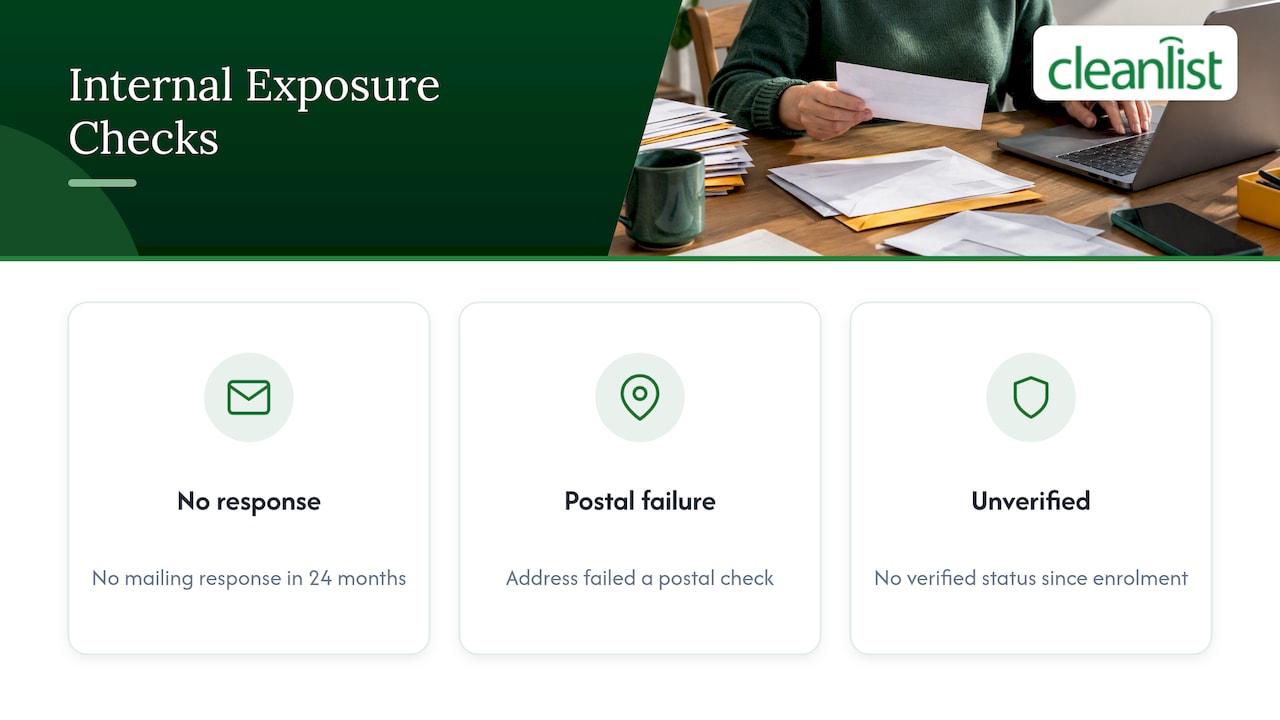
For your own plan, the useful number is internal. Count how many members have not responded to a mailing in 24 months, how many have addresses that failed a postal check, and how many records have no verified status since enrolment. Those three figures tell you where your exposure sits.
What regulators expect: audit, document, verify
OSFI states that conducting retiree and survivor audits is good governance practice to keep records up to date and confirm benefits continue to be paid to the appropriate party. That is the core control. A workable audit programme has four parts:
- Define the population. Every pensioner and survivor receiving payments, plus members with deferred entitlements whose contact details have not been confirmed recently.
- Match against independent sources. Compare your file against current deceased and address data rather than relying on member responses alone.
- Investigate exceptions before acting. A match is a lead, not a verdict. Follow the due diligence steps regulators describe before suspending any payment.
- Record what you did. Document the match, the outreach and the decision, so a later dispute can be answered from the file.
If you administer a plan in Ontario, FSRA’s missing members guidance sets out principles and practices for searching for members whose address is no longer valid. Federally regulated plans should read the OSFI guidance directly. This article is not legal advice. Your plan’s counsel and regulator are the right contacts for what applies to your plan.
Where fresh data fits
Audits are only as good as the data they are run against. A match against a stale list reproduces the problem. For a pension or benefits team, the useful reference data falls into three groups:
| Data need | What goes wrong when it is stale | What fresh data does |
|---|---|---|
| Deceased status | Payments continue after death; survivor entitlements are missed | Flags records for review soon after a death is registered, before the next payment cycle |
| Current address | Members go missing; statements reach strangers | Confirms or corrects the address so outreach lands |
| Standardized contact fields | Duplicates and typos hide the same person in two records | Makes matching accurate, so exceptions are real |
The third row is underrated. Matching depends on clean, consistent names, addresses and postal codes. If your file stores “St.” in one record and “Street” in another, or has the same member twice, a match run will miss people or create false alarms. That is why cleaning and standardizing a database comes before any suppression or audit match. Our guide on spring cleaning your customer database walks through the same sequence in a marketing context, and the logic carries over to member files.
Our perspective
We work with Canadian customer data every day, and the pattern we see in marketing files is the same one regulators describe in pension files: records age silently. A household moves, a customer dies, a business closes, and the database keeps its confident, wrong picture of the world.
In marketing, that costs money in wasted mail and awkward letters to the bereaved. In pensions and benefits, the same decay costs plan assets and exposes members. The technology fix is not exotic. It is current data, processed under Canadian rules, matched often and cleaned before it is matched.
Three convictions shape how we build. First, freshness is a property you maintain, not a feature you buy once, so ongoing maintenance matters more than a one-off clean. Second, Canadian data should be processed, stored and delivered in Canada. Third, a flagged record should always be a prompt for human review, never an automatic decision about a person’s income.
Those principles are why our Canadian Deceased Registry™ and our data cleaning services exist side by side: suppression only works on a file that has been standardized first.
— Jeff
A practical checklist for administrators and data teams
Use this as a starting point for a quarterly review:
- Inventory every field that confirms a member is alive and reachable: address, phone, email, bank account, last verified date.
- Add a “last verified” date to each, and report the share of records older than 24 months.
- Standardize addresses and names before any matching run.
- Match active payees against current deceased data on a fixed schedule, and again before large payment cycles or plan wind-ups.
- Send exceptions through a documented review: obituary and financial institution checks first, specialized search where needed, then member or estate contact.
- Treat changes of banking details as a trigger for extra verification.
- Report the outcome to your governance committee: matches found, payments reviewed, amounts recovered.
- Make it easy for families to notify you. A clear contact page and a phone line catch many deaths before any data match does.
That last item comes from the Dentons commentary, which points out that most improper payments continue because the administrator was never told of the death. Make telling you simple.
Cleanlist for deceased suppression and data cleaning
If you need to identify deceased individuals quickly across a large Canadian file, the Canadian Deceased Registry™ is built for that job. For files that need standardizing, deduplicating or ongoing upkeep before matching, see our database cleaning and enrichment services. Our data suppression page explains how suppression works in practice, and you can read more about cleaning your database of deceased customers.
We do not publish prices for these services. Tell us the size of your file and what you need to verify, and we will scope it with you. You can also request a free assessment to see what your own data looks like today.
FAQ
Is stale data itself pension fraud?
No. Stale data is the condition that makes fraud and improper payments possible. A record that still shows a deceased person as living, or a former address as current, creates the opportunity. Whether a payment becomes fraud depends on whether someone knowingly collects money they are not entitled to.
Can an administrator stop a pension if a member does not return a form?
OSFI’s guidance says that failing to respond to a verification form is not sufficient evidence of death on its own. Administrators are expected to perform due diligence first, such as checking obituaries or contacting financial institutions. Check with your plan’s counsel and regulator before suspending any payment.
Why does direct deposit raise the risk?
With direct deposit there is no cheque to go uncashed and no mail to be returned, so the usual warning signs disappear. A payment can keep landing in an account that someone else can access. Regular status checks against independent data replace the signal that paper used to provide.
How often should we check pensioner status?
Regulators call retiree and survivor audits good governance practice, but they do not set one frequency for every plan. Many teams choose an annual full audit plus smaller checks before major payment cycles. Your plan’s risk profile, size and regulator guidance should set the schedule.
Sources
- FSRA: Missing Members, Principles and Practices
- National Institute on Ageing: Missing Pension Plan Members in Canada
- Canada Gazette, Part 2: Regulations Amending the Canada Pension Plan Regulations
- Dentons / The Canadian Institute: Pension plan administrators could save millions by writing to the dead
- OSFI: Info Pensions, issue 26, May 2022
- ESDC: Audit of Canada Pension Plan Program delivery
- OSFI: Retiree and Survivor Audits (November 2013)
- OSFI: Retiree and survivor audits (May 2022)
- Audit: Pension Division Payments to Deceased Pensioners